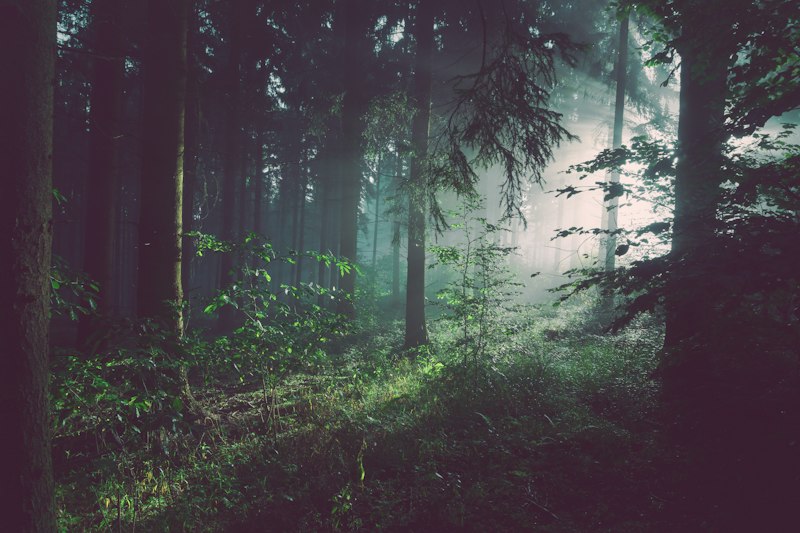
You step into the forest at dusk—the air thick with the scent of damp earth and pine. The trees loom taller than you remember, their gnarled roots twisting beneath your feet like ancient veins. Every rustle of leaves sends a shiver down your spine, not from fear, but from the uncanny sense that the forest is watching you. You reach out to touch the bark of an oak, and for a moment, its rough texture feels like skin. Then, the path ahead splits—one trail bathed in golden light, the other swallowed by shadow. You hesitate. Which way leads home? Which way leads deeper into the unknown?
The forest doesn’t answer. It never does. But your body remembers the weight of the choice—the way your breath shallowed, your fingers curled into your palms, your stomach tightening like a knot. The dream lingers long after you wake, not just in your mind, but in the tension coiled between your shoulders, the faint ache in your jaw. The forest was never just trees. It was you.
The Symbolic Meaning
In Jungian psychology, the forest is a living archetype of the unconscious—a threshold between the known and the unknown, the civilized and the wild. It is the Self in its most primal form: untamed, cyclical, both nurturing and devouring. When you dream of a forest, you are dreaming of the psyche’s hidden depths—places where logic frays and instinct takes over.
The forest mirrors your individuation journey. Are you lost within it? Then you may be grappling with parts of yourself you’ve ignored or repressed. Do you feel guided by an unseen presence? That’s the anima/animus—your inner feminine or masculine—leading you toward wholeness. And if the trees themselves seem alive? That’s the collective unconscious whispering through you, reminding you that you are not separate from nature, but a part of its ancient, breathing body.
Forests also symbolize the shadow—the aspects of yourself you’ve deemed unacceptable. The dark thickets where you stumble? Those are the fears, desires, and memories you’ve buried. But here’s the paradox: the forest’s shadows are not your enemy. They are the soil from which growth emerges. To dream of a forest is to be invited into the dark so you can return to the light changed.
The Emotional Connection
You don’t dream of forests when life is simple. You dream of them when you’re standing at a crossroads—career changes, relationship endings, spiritual awakenings, or the quiet terror of realizing you don’t know who you are anymore. The forest appears when your psyche senses a threshold: a moment that demands you leave the familiar path and step into the unknown.
Research from trauma studies (van der Kolk, 2014) shows that these dreams often spike during periods of liminality—transitional phases where the nervous system is recalibrating. Your body doesn’t distinguish between a life change and a literal wilderness; both register as disorientation. The forest dream is your mind’s way of saying: You are here. This is new. Proceed with curiosity, not control.
“I kept dreaming of a forest fire—trees burning, but the flames didn’t consume them. It wasn’t until I left my corporate job to start my own business that I realized the dream wasn’t about destruction. It was about transformation. The fire was burning away what no longer served me.”
—Lena, 34, Onera user
Forests also surface when you’re avoiding something. The path not taken in your dream? It’s the choice you’re afraid to make in waking life. The lost child you stumble upon in the woods? It’s the part of you that feels abandoned or neglected. Your body knows what your mind tries to rationalize away. The forest doesn’t lie.
Where This Dream Lives in Your Body
The forest dream doesn’t just haunt your thoughts—it anchors itself in your flesh. Here’s where it takes root:
- Pelvis and hips — That heavy, sinking feeling when you realize you’re lost? It pools in your pelvis, the body’s center of grounding. If your hips feel locked or achy after the dream, your nervous system is bracing against the uncertainty of the path ahead.
- Solar plexus — The fluttery, hollow sensation just below your ribs? That’s your gut knowing—the part of you that senses the forest’s hidden dangers or opportunities before your mind catches up. If it’s clenched, you’re resisting the call to trust yourself.
- Throat and jaw — The forest demands silence. If you woke with your jaw clenched or a lump in your throat, you’re holding back words—perhaps the truth you’re afraid to speak, or the question you’re afraid to ask.
- Feet and ankles — The instability of uneven ground? It lives in your feet. If they feel tender or weak after the dream, your body is mirroring the lack of solid footing in your waking life. You’re being asked to move slowly, to feel your way forward.
- Eyes and temples — The forest’s shifting light and shadow can leave a dull pressure behind your eyes. This is your body’s way of processing the overstimulation of the unknown. Your mind is trying to make sense of what can’t be mapped.
These sensations aren’t random. They’re somatic imprints—the nervous system’s way of storing the forest’s lessons in your cells. Ignore them, and they’ll persist. Listen, and they’ll guide you.
Somatic Release Exercise
“Rooting into the Unknown”
For: When the forest dream leaves you feeling untethered, anxious, or overwhelmed by choice.
Time: 5–7 minutes
Science: This exercise combines grounding techniques (Levine, 1997) with polyvagal theory (Porges, 2011) to regulate the nervous system. By physically anchoring yourself, you signal safety to your body, counteracting the disorientation of the forest dream.
- Find your forest floor. Stand barefoot on grass, dirt, or even a wooden floor. If you’re indoors, imagine roots growing from the soles of your feet, sinking deep into the earth. Feel the texture beneath you—cool, rough, alive.
- Breathe like a tree. Place one hand on your belly, the other on your chest. Inhale deeply through your nose for 4 counts, imagining your breath filling your roots. Exhale slowly for 6 counts, releasing tension into the ground. Repeat 5 times. Notice where your breath gets stuck—your ribs? Your throat? That’s where the forest’s message is lodged.
- Move like the wind. With your feet planted, sway gently side to side, like a tree in a breeze. Let your arms hang loose. This isn’t about control; it’s about yielding. If your body wants to tremble, let it. Trembling is your nervous system discharging the dream’s stored energy.
- Speak to the forest. Whisper or say aloud: “I am here. I am held. I do not need to know the way.” Feel the vibration of your voice in your throat and chest. If tears come, let them. The forest doesn’t judge.
- Return with a souvenir. Before opening your eyes, pick up a small object from the ground—a leaf, a stone, a twig. Hold it in your palm. This is your talisman, a reminder that you are both the forest and the one who walks through it.
Do this exercise when the dream’s disorientation lingers. The forest doesn’t give answers—it gives presence. This practice teaches your body to trust the path, even when you can’t see it.
Dream Variations and Their Specific Meanings
| Dream Scenario | Psychological Meaning | Body Cue to Notice |
|---|---|---|
| Being lost in a dense forest | You’re in a period of transition, and your psyche is signaling a need to surrender control. The density of the trees mirrors the overwhelm of too many choices or unresolved emotions. | Tightness in the throat (holding back truth) or heaviness in the legs (resistance to moving forward). |
| A forest fire raging around you | Transformation is imminent. The fire represents the burning away of old identities, beliefs, or relationships. Are you running from the flames or walking through them? | Heat in the palms (suppressed creativity) or rapid heartbeat (fear of change). |
| Finding a hidden path in the forest | A new aspect of yourself is emerging. The path is an invitation to explore what you’ve ignored—talents, desires, or shadow traits. Trust the direction, even if it’s unclear. | Tingling in the hands (readiness to grasp new opportunities) or lightness in the chest (hope). |
| Encountering a wild animal in the forest | The animal is a power animal or a manifestation of your instinctual self. A deer might symbolize gentleness; a wolf, leadership; a bear, introspection. What does the animal evoke in you? | Goosebumps (recognition of a primal part of yourself) or a shiver down the spine (unconscious fear). |
| A forest that feels alive, watching you | The collective unconscious is making itself known. You’re being reminded of your connection to something greater than yourself—nature, spirit, or the web of human experience. | Pressure in the temples (overwhelm) or warmth in the heart (awe). |
| Being unable to leave the forest | You’re avoiding a necessary confrontation—with yourself, a relationship, or a life change. The forest won’t let you go until you face what you’ve been running from. | Weight in the chest (grief) or a knot in the stomach (dread). |
| A forest with no trees, only stumps | You’re grieving a loss—of identity, creativity, or a relationship. The stumps represent what’s been cut down. This dream asks: What do you need to mourn before you can grow again? | Hollow feeling in the belly (emptiness) or tightness in the jaw (suppressed anger). |
| Walking through a forest at night | The dark forest is the shadow self. You’re being called to explore the parts of you that feel taboo or shameful. The night is not your enemy; it’s where the truth lives. | Cold hands (fear) or a lump in the throat (unspoken words). |
| Discovering a cabin or house in the forest | The cabin is your inner sanctuary. Its condition reflects your relationship with yourself. Is it warm and inviting, or cold and neglected? This dream is an invitation to tend to your inner world. | Relaxation in the shoulders (safety) or a sigh (release). |
| A forest that shifts and changes as you walk | Your psyche is in flux. The shifting landscape mirrors your evolving identity or circumstances. This dream reassures you: Change is not chaos. It’s the natural rhythm of growth. | Dizziness (disorientation) or a sense of floating (detachment). |
📖 Go deeper: The Complete Guide to Dream Interpretation
Related Dreams
When the Forest Dreams Back
The forest in your dreams is not a riddle to solve—it’s a conversation to continue. Onera maps the emotions of your forest dreams to the body’s hidden tensions, then guides you through somatic release to integrate their wisdom. No interpretation is complete without listening to the flesh that carries it.
Discover What Your Dreams Mean →FAQ
What does it mean to dream about a forest?
A forest in dreams symbolizes the unconscious mind—the hidden, instinctual, and often untamed parts of yourself. It represents thresholds (life changes, spiritual awakenings, or confrontations with the shadow) and invites you to explore what lies beyond the familiar. The forest’s condition—dense, burning, shifting—reflects your inner landscape. Are you lost within it? Then you may be grappling with disorientation in waking life. Are you finding a path? Your psyche is guiding you toward growth.
Is dreaming about a forest good or bad?
The forest is neither good nor bad—it’s necessary. In Jungian psychology, it’s a sacred space where transformation happens. A dark or frightening forest dream isn’t a warning; it’s an invitation to face what you’ve avoided. Even the most terrifying forests (those with predators, storms, or endless paths) are opportunities to reclaim disowned parts of yourself. The key is to ask: What is this forest teaching me? rather than Why is it scaring me? Your body already knows the answer.
What does it mean to dream of being lost in a forest?
Being lost in a forest is one of the most common—and profound—dream scenarios. It signals that you’re in a liminal phase: a period of transition where old identities, relationships, or beliefs are dissolving, but the new hasn’t yet taken shape. Your psyche is asking you to surrender. The lostness isn’t a failure; it’s a sign that you’re on the verge of discovering something vital. Pay attention to the emotions in the dream. Fear suggests resistance to change; curiosity hints at readiness. Your body will hold the truth—notice where you feel tension (jaw, chest, stomach) when you wake.
Why do I keep dreaming about the same forest?
A recurring forest dream is a message from the unconscious that you’re avoiding. The forest isn’t changing because you aren’t changing—at least, not in the way your psyche needs. This is a call to engage. Try this: Next time you dream of the forest, pause and ask aloud, “What do you want me to see?” Then wait. The answer may come as an image, a feeling, or a sudden knowing. Your body will respond before your mind does—perhaps with a shiver, a sigh, or a shift in your breath. Trust it.
Disclaimer: Dream interpretations are not a substitute for professional mental health care. If your dreams cause significant distress or interfere with daily functioning, consult a licensed therapist. Onera’s insights are based on depth psychology and somatic research but should not replace individualized support.