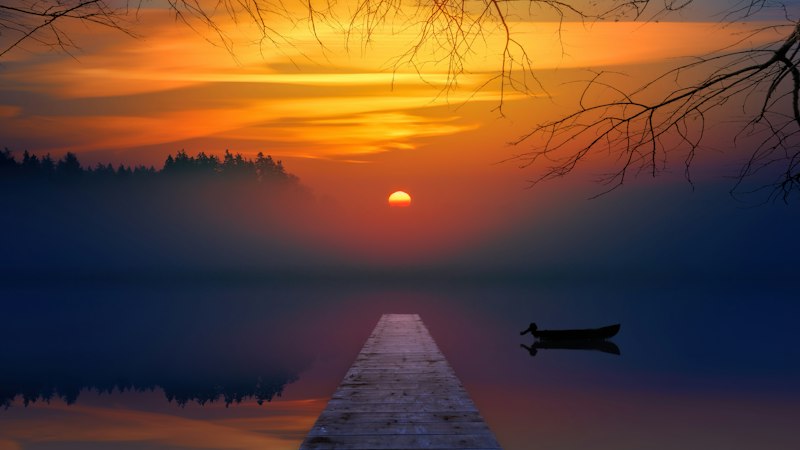
You wake with the taste of salt on your lips—thick, mineral, like the ocean itself has been breathing through you. The dream lingers: you’re standing on a shore of black volcanic sand, waves crashing in slow motion, their edges glowing phosphorescent blue. The island behind you is dense with jungle, vines twisting like veins, the air so humid it clings to your skin. You’re alone. Or are you? There’s a sense of something watching from the trees, something ancient and patient. Your chest tightens—not with fear, exactly, but with the weight of knowing this place is yours to claim, or yours to lose. The dream doesn’t end with an answer. It ends with the tide pulling back, leaving you exposed, the sand shifting beneath your feet like a living thing.
The island in your dream isn’t just a place. It’s a mirror. It reflects the part of you that’s untouched by the noise of daily life—the self that exists when no one’s watching, when the roles you play (partner, worker, parent, friend) dissolve into the rhythm of waves. But islands are also prisons. They contain. They isolate. The moment you step onto that shore, you’re both free and trapped, and the dream forces you to ask: What am I holding onto that’s keeping me from the mainland of my own life?
The Symbolic Meaning
In Jungian psychology, an island is a psychic atoll—a fragment of the unconscious that has risen to the surface, demanding your attention. It’s the locus of individuation, the place where your conscious and unconscious selves meet, often under pressure. Islands are thresholds. They’re where the hero in myths washes up after a storm, where the alchemist retreats to distill their essence, where the exile learns to survive—or perish.
Your dream island is a manifestation of your shadow. Not the dark, monstrous shadow you might fear, but the unlived shadow—the parts of you that have been quarantined by circumstance, choice, or trauma. The isolation of the island mirrors the isolation of these disowned aspects. Are you the one who’s been cast away, or the one who did the casting? The dream doesn’t judge. It simply presents the shoreline and waits for you to step onto it.
Islands also carry the archetype of the Great Mother—both nurturing and devouring. The fertile soil, the abundant fruit, the warm embrace of the jungle: these are the gifts. But the undertow, the quicksand, the creatures that slither in the dark: these are her warnings. To dream of an island is to dream of dependency and independence in the same breath. It’s a question: Can you feed yourself without being consumed?
The Emotional Connection
Island dreams surge during transitions—when you’re on the cusp of a major life change but haven’t yet severed the ties to what was. A promotion that requires relocation. A relationship ending. A creative project that demands solitude. The island is the liminal space between the old world and the new, and your body knows it before your mind does. That’s why these dreams often arrive with a physical sense of suspension—a stomach that drops like you’re falling, even though you’re standing still.
They also surface when you’re avoiding integration. Maybe you’ve been pushing down anger, or grief, or desire, and the island is the unconscious’s way of saying, Here. This is yours. You can’t keep pretending it doesn’t exist. The isolation of the dream isn’t punishment. It’s an invitation to finally turn and face what you’ve been running from.
“I started dreaming of islands after my divorce. In the dreams, I’d be on this tiny speck of land, the ocean stretching forever in every direction. At first, I thought it meant I was lonely—like I’d been marooned. But then I noticed something: in the dreams, I was never hungry. The island always had food. Fresh water. Shelter. It took me months to realize the dream wasn’t about abandonment. It was about capacity. My body was showing me I could survive on my own.”
— Mira, 38, Onera user & somatic experiencing client
Trauma, too, lives in island dreams. If you’ve experienced betrayal, abandonment, or a sudden loss of safety, the island can become a somatic metaphor for the nervous system’s attempt to create boundaries. Your body, in its wisdom, builds an island to keep the overwhelm out. But islands can also become cages. The dream is asking: Is this boundary protecting you, or is it keeping you from the life you’re meant to live?
Where This Dream Lives in Your Body
Island dreams don’t just haunt your mind—they settle in your body, like sediment in a tidal pool. Here’s where you’ll feel them most:
- Solar plexus (just below the sternum): That hollow ache, like you’ve been punched in the gut. It’s the physical echo of existential loneliness—the fear that you’ll never truly be seen, never truly belong. Your breath might shallow here, as if your body is trying to make itself smaller, less noticeable.
- Throat: A tight band around your neck, or a lump that won’t swallow. Islands are places of silence—no one to hear you scream, no one to answer. This is where your body stores the unsaid: the words you’ve swallowed, the truths you’ve buried to keep the peace.
- Feet and ankles: A tingling heaviness, like your feet are sinking into wet sand. This is the groundlessness of transition—the fear that the earth beneath you might give way. Your body is literally trying to root, but the island won’t let it.
- Lower back: A dull, persistent ache, like you’re carrying something heavy. This is where your body holds unprocessed responsibility. The island is yours to tend, yours to defend. But what happens when you can’t carry it anymore?
- Skin: A crawling sensation, like the jungle’s humidity is still clinging to you. Islands are places of hypervigilance—every rustle in the leaves could be danger, or salvation. Your skin remembers this. It stays on high alert, even after you wake.
Somatic Release Exercise
“Tidal Breathing” — A Somatic Practice for Island Dreams
Why it works: Island dreams activate the dorsal vagal complex—the part of your nervous system responsible for shutdown, dissociation, and the “freeze” response. This exercise gently stimulates the ventral vagal pathway, which governs safety, connection, and social engagement. By synchronizing breath with imagined tides, you’re not just “calming down.” You’re repatterning your nervous system to move fluidly between isolation and connection, just as the ocean moves between shore and sea.
What you’ll need: A quiet space, 5-10 minutes, and a willingness to feel held by something larger than yourself.
- Find your shoreline: Lie on your back, knees bent, feet flat on the floor. Place one hand on your belly, one on your chest. Close your eyes. Imagine you’re lying on the shore of your dream island. The sand is warm. The waves are rhythmic.
- Inhale (the tide comes in): As you breathe in, imagine the ocean rising toward you. Let your belly expand first, then your ribs, then your chest. The water touches your toes, your ankles, your calves. Feel the weight of it. This is your body learning to receive.
- Pause (the high tide): At the top of your inhale, hold for 2-3 seconds. Imagine the water cradling you, buoyant, effortless. This is the moment of surrender—not to the island, but to the larger force that contains it.
- Exhale (the tide goes out): As you breathe out, imagine the water receding. Let your chest soften first, then your ribs, then your belly. The sand beneath you is revealed, cool and firm. This is your body learning to release—not just air, but the illusion of control.
- Repeat for 5-7 cycles: With each breath, notice where you’re holding tension. The jaw? The shoulders? The hips? With each exhale, let the tide carry it away. You are not the island. You are the ocean.
- Integration: When you’re ready, roll onto your side and press yourself up to sitting. Place your hands on the floor behind you, fingers pointing toward your feet. Arch your back slightly, lift your chest, and take one more deep breath. This is the posture of emergence—the moment the island’s first inhabitant stepped onto the shore and said, I am here.
Science note: This practice leverages interoceptive exposure—a technique shown to reduce trauma-related dissociation (van der Kolk, 2014). By focusing on the sensation of the breath rather than the content of the dream, you’re teaching your nervous system that isolation doesn’t have to mean danger. The tide always returns.
Dream Variations and Their Specific Meanings
| Dream Scenario | Psychological Meaning | Body Cue |
|---|---|---|
| Being stranded on a deserted island | Fear of abandonment or self-imposed isolation. Your unconscious is testing your capacity to survive without external validation. The island is a mirror: What do you see when you’re forced to look at yourself? | Jaw clenching, as if biting back words you’re afraid to say. |
| Discovering a hidden island no one knows about | Unclaimed creativity or repressed desire. The island is a part of you that’s been waiting to be found. What would you build here? What would you let grow wild? | Tingling in the hands, as if reaching for something just out of grasp. |
| An island that’s slowly sinking into the ocean | Fear of losing your foundation. This dream often surfaces during major life changes (career shifts, aging, empty nest syndrome). The sinking isn’t failure—it’s transformation. What needs to dissolve for you to float? | Stomach dropping, like the floor has given way beneath you. |
| Being on an island with a lover (or ex-lover) | Unfinished emotional business. The island is the container for your relationship—intimate, but also bounded. Are you here by choice, or are you both trapped? Pay attention to the weather in the dream. Storms = unresolved conflict. Calm seas = acceptance. | Heat in the chest, like your heart is expanding or contracting. |
| An island that’s actually a living creature (e.g., a turtle, a whale) | Integration of the animal self. The island-creature is your instinctual nature—the part of you that knows how to survive without logic, without language. Are you riding it, or is it carrying you? | Spine lengthening or curling, like your body is remembering its primal shape. |
| Building a shelter on an island | Constructing a new identity. This dream often appears when you’re stepping into a new role (parenthood, leadership, artistic pursuit). The shelter is your psychic architecture. What materials are you using? Are they strong enough to weather the storm? | Shoulders tensing, as if bearing a physical load. |
| An island that’s on fire | Purging the old to make way for the new. Fire dreams are alchemical—they burn away what no longer serves you. The island is your psyche. What’s being consumed? What’s rising from the ashes? | Skin flushing, as if the heat is still on you. |
| Finding other people on a “deserted” island | Shadow integration. The “others” are aspects of yourself you’ve disowned—your anger, your ambition, your vulnerability. The dream is asking: Can you coexist with these parts, or will you exile them again? | Goosebumps, as if your body is recognizing something familiar. |
| An island that’s floating in the sky | Spiritual longing or disconnection from the earthly. This dream often appears when you’re seeking meaning beyond the material world. But beware: sky islands can also signal dissociation. Are you ascending, or are you untethered? | Lightness in the limbs, like you might drift away. |
| Being unable to leave an island, no matter how hard you try | Fear of commitment or fear of freedom. The island is a paradox: it’s both your prison and your sanctuary. This dream surfaces when you’re at a crossroads. What are you afraid to leave behind? What are you afraid to carry forward? | Legs feeling heavy, like they’re rooted to the ground. |
📖 Go deeper: The Complete Guide to Dream Interpretation
Related Dreams
When the Island Dreams of You
Your body knows the shape of this dream before your mind does. Onera maps the emotional currents of your island dreams—where they live in your nervous system, how they move through your muscles, what they’re asking you to reclaim. Then, we guide you through somatic release, so you can step off the shore and into the tide, without losing yourself in the waves.
Discover What Your Dreams Mean →FAQ
What does it mean to dream about an island?
Island dreams are threshold dreams—they mark the boundary between who you’ve been and who you’re becoming. Psychologically, they represent isolation, integration, or initiation. You might dream of an island when you’re craving solitude, when you’re avoiding a part of yourself, or when you’re on the cusp of a major life change. The key is to ask: What does this island want from me? What does it offer? The answer is rarely about the island itself. It’s about the relationship between you and the vast, uncharted waters around it.
Is dreaming about an island good or bad?
There’s no universal “good” or “bad” in dreams—only what your nervous system is trying to communicate. An island dream can be a warning (e.g., “You’re isolating yourself too much”) or an invitation (e.g., “It’s time to claim this part of yourself”). The tone of the dream matters. A stormy island feels different from a lush, sunlit one. So does your body’s response. Do you wake with a sense of relief? Dread? Longing? Your physiology doesn’t lie. If the dream leaves you with chest tightness or shallow breathing, it’s likely pointing to unresolved tension. If it leaves you with a sense of spaciousness or curiosity, it might be a nudge toward growth.
What does it mean to dream of a deserted island?
A deserted island dream is a somatic metaphor for aloneness—but not necessarily loneliness. It often surfaces when you’re:
- Entering a phase of deep self-reliance (e.g., starting a business, becoming a parent, recovering from loss).
- Avoiding a truth that requires solitude to face (e.g., “I’m unhappy in this relationship,” “I need to change careers”).
- Processing a trauma that left you feeling cut off from others (e.g., betrayal, abandonment, chronic illness).
The dream is asking: Can you be alone without being lonely? Can you tend to this island without letting it become a prison? Pay attention to the resources in the dream. Is there food? Shelter? Fresh water? These details reveal whether your unconscious sees this solitude as sustainable or unsustainable.
What does it mean to dream of an island with someone else?
Dreaming of an island with another person is a relationship dream in disguise. The island becomes the container for the dynamic between you. Ask yourself:
- Is the island shared (e.g., building a life together), or is one of you visiting (e.g., a temporary connection)?
- Is the other person helping you (e.g., offering food, shelter) or depending on you (e.g., you’re the one providing)?
- Do you want to be on the island with them, or do you feel trapped?
These dreams often reflect unconscious contracts in relationships—what you give, what you take, what you’re afraid to ask for. The island is neutral. It simply holds the truth of the dynamic, like a petri dish holds a culture. What grows there is up to you.
Disclaimer: The content in this article is for informational purposes only and is not intended as medical, psychological, or professional advice. Dream interpretation is highly subjective and deeply personal. If your dreams are causing distress or interfering with your daily life, consider speaking with a licensed therapist or somatic practitioner. Onera’s dream decoding and somatic exercises are designed to support self-exploration, not replace professional care.